sábado, 7 de março de 2020

“What you seek is seeking you.” ― Mawlana Jalal-al-Din Rumi

O minarete da Mesquita Koutoubia, Marrakech, foi projetado no estilo Almohad e construído em arenito. A torre tem 77 metros, sendo visível a uma distância de 29 quilômetros.

The minaret of Koutoubia Mosque, Marrakech, is designed in Almohad style and was constructed of sandstone. The tower is 77 metres, being visible from a distance of 29 kilometres. 

Le minaret de la mosquée Koutoubia, Marrakech, est conçu dans le style almohade et a été construit en grès. La tour mesure 77 mètres et est visible à une distance de 29 kilomètres.

Fotos obtidas em / Photos taken on / Photos prises à: 2020.01.27 

utilizado / used / utilisé: polarizador / polarizer / polariseur Hoya


Colors and traditions in the new architecture of Marrakech

Praça jardim 16 de Novembro - Marrakech
Na praça, há um conjunto de novos edifícios que foram concebidos na década de 1990. No projeto finalizado, podemos ver que um certo estilo "orientalista" foi seguido. A cor da areia também está presente como encontramos na cidade.

Square garden 16 November - Marrakech
In the square there is a set of new buildings which were designed in the 1990s. In the finished project we can see that a certain "orientalist" style was followed. The sand color is also there as it found everywhere in the city.

Place jardin du 16 Novembre - Marrakech
Dans la place il y a un  ensemble de bâtiments nouveaux qui ont été coçus dans les anées 1990. Dans le projet fini on peut s’apercevoir qu’un certain style « orientaliste » a été suivi.  La couleur sable est lá aussi comme on retrouve partout dans la ville.

Fotos obtidas em / Photos taken on / Photos prises à: 2020.01.12 


sexta-feira, 6 de março de 2020

Jardin Majorelle - Marrakech

O Jardim Majorelle Garden é um jardim botânico e paisagístico em Marrakech, Marrocos. Foi criada pelo artista orientalista francês Jacques Majorelle em 1923. Nele existe uma vila cubista projetada pelo arquiteto francês Paul Sinoir na década de 1930. A propriedade foi comprada pelos estilistas Yves Saint-Laurent e Pierre Bergé, que trabalharam para restaurá-la na década de 1980. A vila abriga o Museu de Arte Islâmica de Marrakech e o Museu Bérbere.

The Majorelle Garden is a botanical and artist's landscape garden in Marrakech, Morocco. It was created by the French Orientalist artist, Jacques Majorelle in 1923. There we have a Cubist villa designed by the French architect, Paul Sinoir in the 1930s. The property was purchased by the fashion designers, Yves Saint-Laurent and Pierre Bergé who worked to restore it in the 1980s. The villa houses the Islamic Art Museum of Marrakech and the Berber Museum.

Le Jardin Majorelle est un jardin botanique et paysage  à Marrakech, au Maroc. Il a été créé par l'artiste orientaliste français, Jacques Majorelle en 1923. Nous y avons une villa cubiste conçue par l'architecte français Paul Sinoir dans les années 1930. La propriété a été achetée par les créateurs de mode, Yves Saint-Laurent et Pierre Bergé qui ont travaillé à sa restauration dans les années 1980. La villa abrite le musée d'art islamique de Marrakech et le Musée Berbère.

Fotos obtidas em / Photos taken on / Photos prises à: 2020.01.27 


quinta-feira, 5 de março de 2020

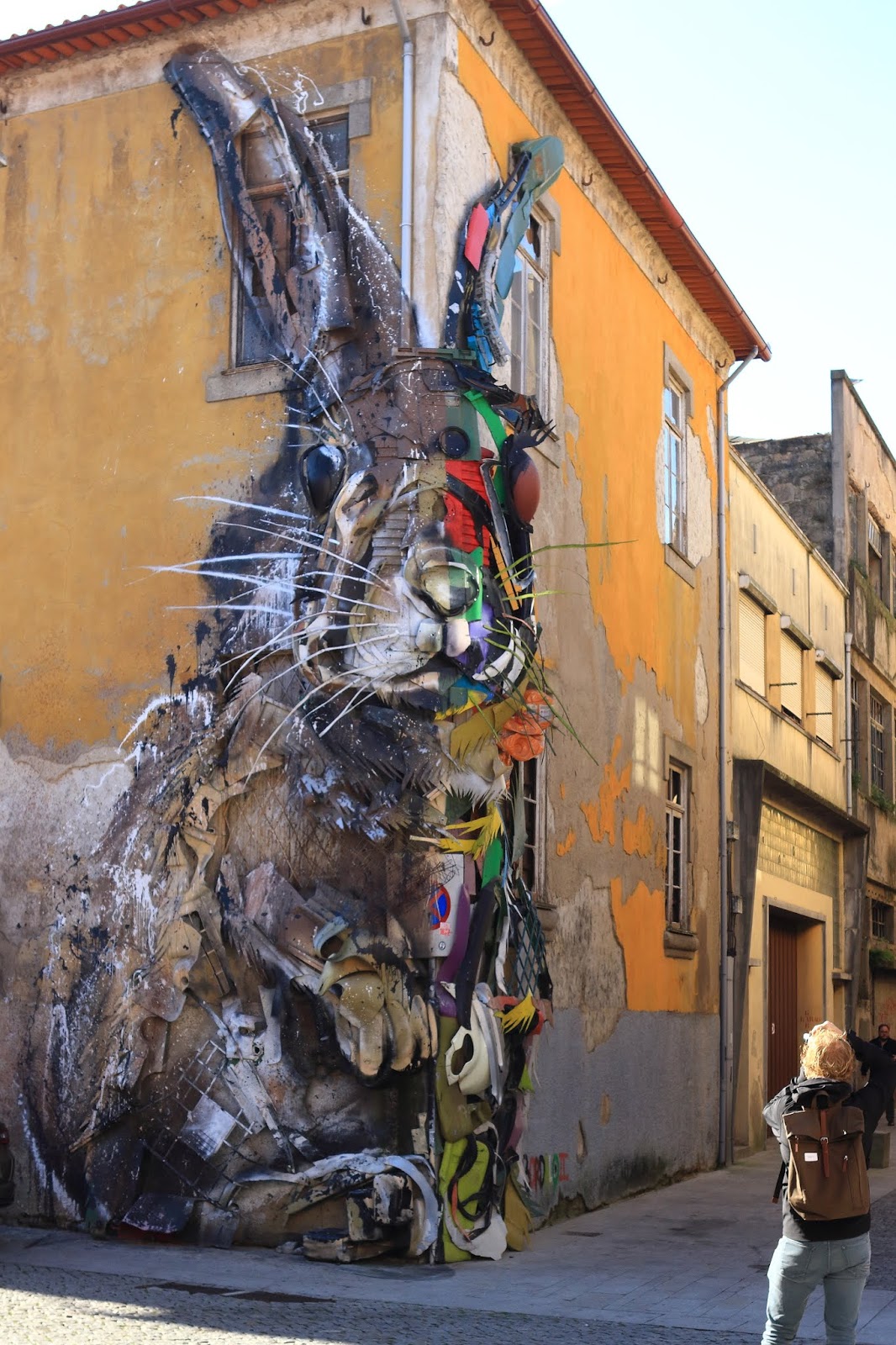
The Rabbit Corner

Arte Urbana -  Vila Nova de Gaia
O local onde coelho alerta a cidade sobre os seus problemas

Street Art - Vila Nova de Gaia
The place where rabbit alerts the city about its problems

Art Urbain - Vila Nova de Gaia
L'endroit où le lapin alerte la ville de ses problèmes

Foto obtida em / Photo taken on / Photo prise à: 2020.01.12 


terça-feira, 3 de março de 2020

Iron in dialogue

Diálogo entre o corrimão e a ponte.
Dialogue between the handrail and the bridge.
Dialogue entre la main courante et le pont.

Foto obtida em / Photo taken on / photo prise à: 2020.01.12


segunda-feira, 2 de março de 2020

The Romanticist Castle

O Palácio da Pena é um castelo romântico em Sintra. O castelo fica no topo de uma colina na Serra de Sintra, de frente para a vila. É uma das principais expressões do romantismo do século XIX no mundo. A história do castelo começou na Idade Média. Em 1838, o rei consorte Ferdinand II (Fernando Franz Anton von Sachsen-Coburg und Gotha) decidiu adquirir as ruínas e transformá-las num palácio que serviria de residência de Verão para a família real portuguesa.
 Foi encarregado da reconstrução, em estilo romântico, o tenente-general e engenheiro de minas Wilhelm Ludwig von Eschwege. Eschwege. 
O Palácio da Pena tem uma profusão de estilos, essa mistura intencional de estilos ecléticos inclui o neogótico, neo-manuelino, neo-islâmico e neo-renascentista.
O palácio é Patrimônio Mundial da UNESCO

The Pena Palace  is a Romanticist castle in Sintra. The castle is  on the top of a hill in the Sintra Mountains facing the village. Is one of the major expressions of 19th-century Romanticism in the World.
The castle's history started in the Middle Ages. In 1838 King consort Ferdinand II (Ferdinand August Franz Anton von Sachsen-Coburg und Gotha) , he decided to acquire the ruins and decided to transform them into a palace that would serve as a summer residence for the Portuguese royal family. 
The commission for the Romantic style rebuilding was given to Lieutenant-General and mining engineer Wilhelm Ludwig von Eschwege. Eschwege.
The Pena Palace has a profusion of Styles, this intentional mixture of eclectic styles includes the Neo-Gothic, Neo-Manueline, Neo-Islamic and Neo-Renaissance.
The palace is a UNESCO World Heritage Site

Le Palais de Pena est un château romantique à Sintra. Le château est au sommet d'une colline dans les montagnes de Sintra face au village. Est l'une des principales expressions du romantisme du 19e siècle dans le monde.
L'histoire du château a commencé au Moyen Âge. En 1838, le roi consort Ferdinand II (Ferdinand August Franz Anton von Sachsen-Coburg und Gotha), il a décidé d'acquérir les ruines et a décidé de les transformer en un palais qui servirait de résidence d'été pour la famille royale portugaise.
La commande pour la reconstruction de style romantique a été donnée au lieutenant-général et ingénieur des mines Wilhelm Ludwig von Eschwege. Eschwege.
Le Palais de Pena a une profusion de styles, ce mélange intentionnel de styles éclectiques comprend le néo-gothique, le néo-manuélin, le néo-islamique et la néo-renaissance.
Le palais est un site du patrimoine mondial de l'UNESCO

utilizado / used / utilisé: polarizador / polarizer / polariseur Hoya

Foto obtida em / Photo taken on / Photo prise à: 2019.12.28


Art Makes Difference - Statement or Question?

Uma declaração ou uma pergunta? A arte pode realmente causar impacto no mundo real hoje? 
Ao fundo: Teatro Nacional D. Maria II, design neoclássico, construído entre 1842 e 1846.
Arquiteto Fortunato Lodi.

A statement or a question?  Can Art truly make an impact in the real world today?
Background: D. Maria II National Theatre, a Neoclassical design,  built between 1842 and 1846.
Architect Fortunato Lodi.

Une déclaration ou une question? L'art peut-il vraiment avoir un impact dans le monde réel aujourd'hui? 
Arrière-plan: Théâtre national D.Maria II, de conception néoclassique, construit entre 1842 et 1846.
Architecte Fortunato Lodi.

Foto obtida em / Photo taken on / Photo prise à: 2019.12.26